Iron and Barrels

This weekend, we finished our shower! This was a really exciting point for us, as it is the first thing in the tiny house which is fully completed. This also means it will be a lot easier for us to stay at the site for longer, and possibly get some work done during the week as well.

The first thing we did was to frame the ceiling with some small blocks of wood, which I stained. The blocks turned out to be very difficult to nail into place as they are small and the wood we are using is quite hard and splintery. Tom had a hard time (and there were a few swear words), but we eventually got them fixed into place. I then coated the entire top of the shower with a decent layer of polyurethane.

After the polyurethane was dry, it was time to start cutting the iron to size and screwing it into place. We went down to see Phil and Karyn first, as they had done a similar shower earlier in the year. Theirs looked great, and was still going strong, which is encouraging for us! Phil said he simply bent the iron around the corners, and it was thin enough to go into place. This turned out to be true to a certain extent, but rather tricky, and involved quite a bit of wrestling with the iron. The end result was a bit more of a curved corner than a perfectly folded one, but we were both happy with the finished product.

Tom then continued screwing the iron fully into place, before he set about connecting the water pump and gas califont. While he did this, I began to stain the beams in the kitchen. The wood used for the beams got weathered over the winter, so I wanted to brighten it up a bit again. I considered painting it the same colour as the kitchen, but Tom was really keen on having the “exposed beam” look. I managed to find a stain (another deck stain again), which made no difference to the colour of the wood which was undamaged, but brightened up the weathered wood subtly. After two more hours of hard work, we had some stained beams, and a working shower! We were both very grateful to be able to use the shower that night – it worked well and the pressure was amazing!

The next day, we started working on the wine barrel sink. I was unable to find a good tutorial online for this (I may upload one myself at a later date – watch this space!). Luckily, Tom had a good idea of how to cut out the barrel without it all falling apart. However, we decided to use a practice barrel first (when we purchased them, they came in a set of two), just in case we screwed anything up. First, we marked out the door. Then, we marked out the middle of each piece of wood in the section of the barrel we were cutting the door out of. Next, we drilled some holes, and put screws into each spot we had marked. This was to attach the wood to the iron rings (and therefore keep the barrel intact when we cut it up).

Next, Tom cut through the iron in the sections we wanted to cut the door out of. Unfortunately, it was a very hot day when we did this, and we had moved inside to stay out of the sun. It was a nerve-wracking moment for me when Tom did the angle-grinding of the iron rings inside the house (pointing into the kitchen). Luckily, there were no casualties.

Next, he used the drill to make a pilot hole, before cutting the wood out with the jigsaw. The door came out and didn’t fall apart – the barrel looked great! Tom did an amazing job at cutting nice and straight with the jigsaw, and I’m really excited to continue working on the project. Unfortunately, our “practice barrel” was inhabited by a baby bird’s nest for a few weeks, so it was a bit smelly and filled with hay when we opened it. I’m hoping that after a good clean out and a sand down, I will be able to make two successful barrel-cabinets.

We then repeated the door-making process with the actual barrel which will be in the bathroom, when we were sure it was going to work. Next time, we will have to make a hole for the sink in the top of the barrel, and fit some drainage. Then, I will have to figure out how I want to build the shelves to go inside the barrel. I do have a plan for some extra storage in the bathroom too, but it would be nice to get as much space out of the barrel sink for storage as possible.

We ended up going away really happy with our weekend’s work, and excited to continue moving on with the project. During the course of the weekend, we also planned out how we will run the rest of the plumbing, and made a list of supplies we will need for this. It is really good to have these “big step” things ticked off, and feel organized for the next part of the build. I was getting a bit worried about not having the house finished before we have to leave our flat, but, at the rate we are currently going, I feel much more at ease about getting the place finished now!

Starting the Shower

So, it’s been a while since my last post! After having a break from the tiny home for a while, Tom and I finally got back into things. The winter was a little too cold for building and staying out there, and with the ski season happening, we wanted to spend as much time up the mountain as possible. I have also been dealing with an injury – I tore some ligaments in my leg and damaged the calf muscle, so was unable to do much in the way of physical activity for a few weeks (luckily after I had managed a few good ski sessions, though!).

It was hard to drag ourselves back into the project – after gaining some weekends of freedom (and probably much-needed down time). The first weekend we went back up to the site, Joe came with us. He has returned from college to live back in Christchurch, and was eager to come and see how the project had progressed since the last time he was there (when we had just finished building the floor). After admiring the house, he cracked on with mowing the lawns, which had sprung up with a vengeance. We then managed to finish building the internal wall structure, so we could pop some plywood on top so Joe had somewhere to sleep. It was really nice to see the inside structure of the house fully framed out. It was also great to have Joe as our official first house guest!

After the weekend with Joe, it was time to buy some more supplies. Our next big job is to complete the shower and toilet, so we needed to get some plumbing materials in order to do this. We spent the weekend gathering everything we would need for the next part of the project. We are planning to have exposed piping in the bathroom, so buying the right kind of copper piping for this design was important. Tom also bought a bending tool so he can manipulate all the piping himself.

The first practical job was to cut the drainage hole for the shower, so we could fit the tray into place. Unfortunately, when Tom went to do this, he realized that with the current positioning, the hole would be over a floor joist. This meant we had to build a second “blocking out” wall at the back, and our shower has come out into the room by a few mm. Luckily, we gave ourselves enough space in the bathroom that this is not a major issue. Eventually, the second wall was built and the hole for the drainage successfully cut out. Next, the shower tray was glued into place. We used silicone to stick it to the floor.

While the shower tray was drying, we set up a “temporary toilet” inside the house. We mounted a piece of cut-out ply on two bits of wood attached to the joists, which will obviously have to be taken down when we build the internal wall between the toilet and bathroom. We put the plywood on a hinge system, so we can easily lift the lid up and get the bucket out. Eventually, the plan is still to have external access to the toilet, but we need to find a window frame suitable to mount into the side of the house to do this. For now, the hinge system is our best option. However, using the hinges meant that we couldn’t permanently mount the pee drain hose, as this is attached to the bottom of the urine separator on a permanent basis. Tom had the idea to use a funnel which the urine separator just sits into when the lid gets lifted up and down, so the person emptying the bin doesn’t have to reconnect the urine hose each time. This is something we will hopefully set up in the next couple of weeks.

I also spent some time on minor aesthetic projects over the weekend while things were drying/ Tom was busy. I oiled the macrocarpa beam to stop it from drying out and cracking (and it absorbed the oil instantly – clearly this was much needed!). I also oiled the slab of wood we will be using as a table. Another thing I managed to finish was spraying the inside of the two windows which didn’t match the rest. This meant I was able to take down the tape and paper protecting the glass in the kitchen, which gave the house a lot more light. I still have no idea how I’m going to get up high enough to spray the outside of the bedroom window, but I figure this is a problem for another day.

After the shower tray was dry, it was time to fit the drainage. I went under the house and held the drain attachment, while Tom screwed it into place, using a bead of silicone again for waterproofing. Next, we could begin the insulation process. We made this into quite a fun game with the offcuts of Pink Batts Tom had managed to get hold of. Because they were all cut up into small squares, it was like a jigsaw puzzle to find the perfect sized pieces to fit into the wall. We made quite an efficient team, with one person sorting through the squares (which we tipped out all over the floor), and passing them through to the person in the shower who would pop them into the wall. We had the shower nicely insulated in no time!

After this, it was time to cut and fit the plywood backing. Our original plan was just to use miniature corrugated iron, but we weren’t sure this would be strong enough to provide a sturdy shower wall. Fitting ply behind was a more sensible option in the end. After cutting and fitting the ply, we used building paper to cover it for extra waterproofing (we figured if it’s good enough to keep the exterior of the house weather-tight, it should be good enough for the inside).

After fitting the ply, we decided to also put a ceiling into the shower. Our original plan was to just keep the exposed beams, however, we re-visited that and thought that the easiest thing to do for damp-proofing would be to pop in an extra bit of ply above, coated with polyurethane. I also decided to stain this with some deck stain before putting on the polyurethane coating. I was really happy with the end result, which is a reddish colour which will make a great contrast with the iron.

Next time, we will fit the iron and put in the plumbing and (hopefully) have a functional indoor shower! This will mean we will have more flexibility to stay out here more often, such as on worknights, and will be able to get heaps more done! We have two months left on our current lease, so we have to have the house in a liveable state by that point. It is a daunting task to get the house up to scratch by this point, but also very exciting to think we could be living in it in such a short time!

Beginning the Bathroom

This weekend, we began the final planning and construction of the bathroom and toilet section of the house. Unfortunately, it was a very wet weekend, and I also ended up getting sick, so we were somewhat slower than we might have been otherwise. Even so, we were happy to get a solid plan into place with how were are going to construct the walls and mezzanine, and get everything spaced out properly. The first thing I did was to unload my wine barrels off the trailer. The difference at this point between the one I have treated and the one I haven’t was massive – the treated barrel had repelled the water nicely (great news considering it is going in the bathroom!). Thanks are due yet again to Joe for the Danish oil needed to achieve this, and the expertise on appropriate wood treatment. We rolled the designated bathroom barrel into place, and laid the shower tray out next to it. Although things are going to be a squeeze, everything did fit into place nicely (thank goodness!). We did have one small disappointment – the old cast iron pot we were planning on using as the bathroom sink was a bit too small and didn’t look quite right when placed on top of the barrel. It will be back to the drawing board to find something we can use for our sink! Unfortunately, Tom has already drilled a tiny hole in the cast iron pot at this stage – which was supposed to be the beginning of a hole for the drain. However, now that we won’t be using it as a sink, it simply means we will have a slowly leaking dinner if we decide to use it for its original purpose…

I then began the process of restoring the other barrel – first giving it a blast with the water blaster (not an ideal activity to be doing in the freezing cold rain admittedly, but it was still very satisfying to watch the dirt blast off). This was a lot easier than the last barrel restoration, where we didn’t have the water blaster and I had to clean it off by hand! After the barrel dries out, I will be able to give it a light sand and treat it with the Danish oil to give it a nice colour and some water resistance.

After this, we made a plan for how to construct the mezzanine on this side. Because this one has a couple of walls to construct, it is a little more complicated than just chucking it up like we did with the one above the kitchen. We are making a beam out of two strips of timber which will be the top of the wall between the bathroom and toilet, and which will add extra support to the mezzanine itself. We had to make a decision about how best to construct the mezzanine and the wall. We narrowed it down into 3 options:

  1. Build the mezzanine first (beam in place), and build a wall with a separate top plate, which will slot in below.
  2. Build the wall with the beam as the top plate, and slide it into place before building the mezzanine around the beam.
  3. Build the mezzanine (beam in place), then build the wall up to meet the beam.

We decided that option 1 was probably the easiest, although for any of the options, our measurements will have to be very precise to ensure things slot into place as they should. Also by fitting the beam in first and securing the joists to it using purlin hangers, it means we will be able to use shorter cuts than we were able to on the other side, as the beam breaks things up in the middle. This means we should be able to use the offcuts from the other mezzanine, and, if we are careful, should be able to use the rest of our remaining timber without having to buy more (and having a minimum of waste wood).

We also had to decide where to fit the beam – as this will affect the width of the hallway. We originally decided on an 900mm hallway, but this was going to be tricky – as we needed to block out a stud for the beam to rest on (having not been able to find a purlin hanger the appropriate size to fix it onto the existing stud). We eventually decided to drop the hallway back to 850mm, after putting up a piece of ply at the appropriate place to ensure this wouldn’t be too cramped (both in the hallway and toilet). This will give us a nice resting place for the beam, and a bit of extra room in the bathroom.

Finally, we begun cutting our top plate for the mezzanine on the back wall. As we don’t have timber left which is long enough to span the distance, we used two pieces with a join over a stud, which we glued and nailed together. We then put together the beam similarly – by measuring, cutting, gluing and nailing two bits of timber together. At this point, we had to stop as we didn’t have the correct drill bit with us to screw the beam into place, and had run out of purlin hangers to affix the floor joists into. We decided to head for home (and dry – it was absolutely pouring with rain – culminating in the worst downpour when we were packing up which went entirely through our jackets and soaked us through). Next time, we will hopefully have adequate supplies to complete the mezzanine.

We also came up with a plan for the shower over the weekend. After watching many instructional videos on shower installation, we decided to ignore all of them and simply fit baby iron as the shower walls. This should be one of the most reliably waterproof materials we can use – although we discussed putting an extra layer of building paper behind for added waterproofing.

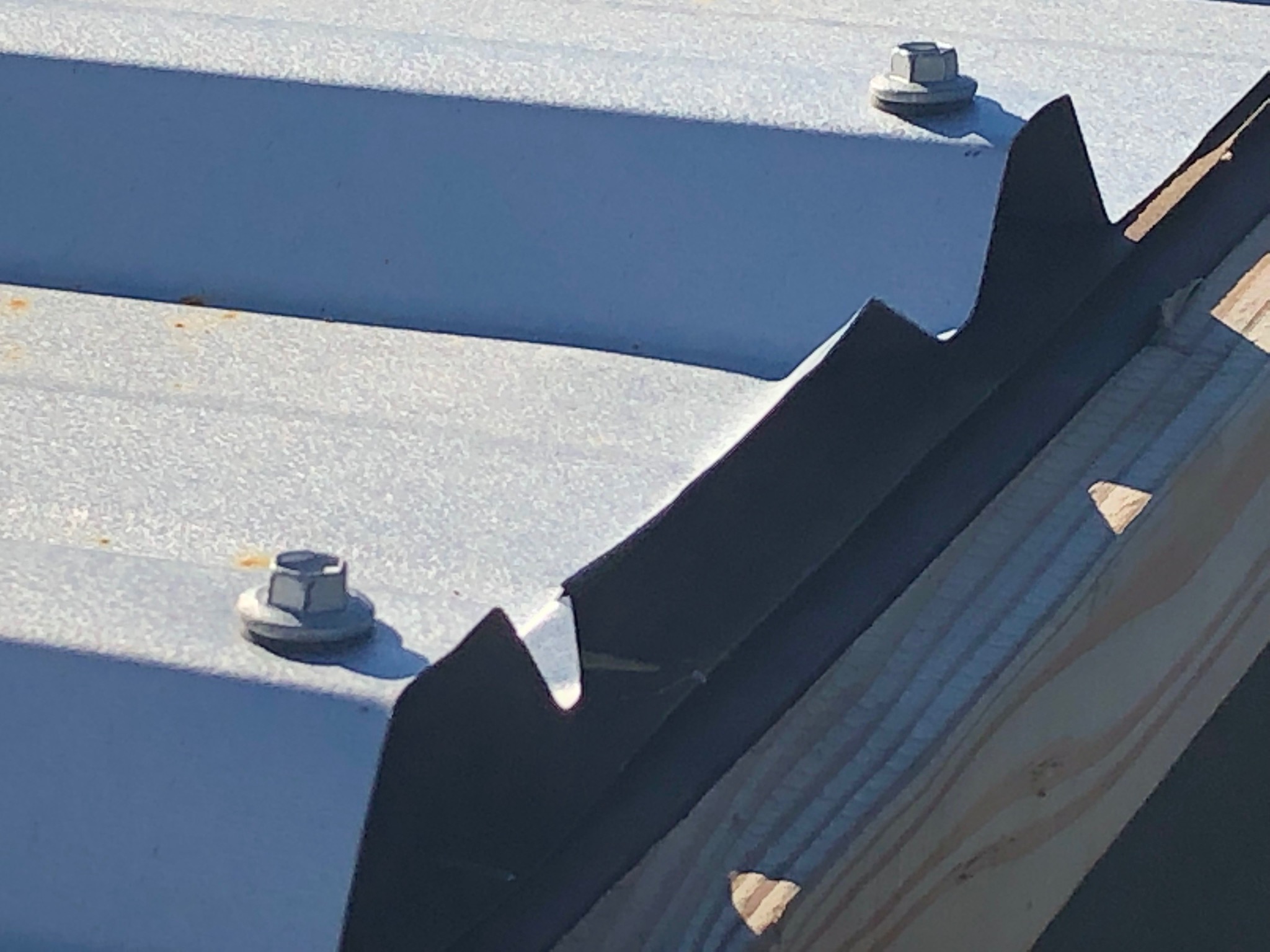
The other job that needed to be done was water blasting the roof. Tom forgot to brush the iron shards that descended as we were screwing the roof into place away when we fitted the roof into place. This turned out to be an incredibly important omission, as they are now starting to cause small rust spots on the roof. Tom got up with a water blaster and attempted to clean these off at the weekend, however, they are now firmly affixed and will not simply wash away. He then did a “test patch” with a steel wool pad – which may have worked slightly too well and now pulled a coating off the surface of the roof too. He decided to leave the “test patch”for a couple of weeks and see what happens – if this starts to rust too we may have to go back to the drawing board on how to rescue the roof surface.

Mezzanine Madness

The last couple of weekends have marked slow but steady progress for us. Last weekend, we finished screwing all the plywood into place properly. This meant we could take down the bracing inside the house which was adding a little extra support. Now, as well as adding in the flashing and guttering to the outside of the house, we can also start on the inside work. During the week, we also finally managed to find a stainless steel shower tray. Now that we have this (and therefore the dimensions of the shower), we are able to start the inside planning and construction. We also made some enquiries into bending our own flashing and guttering at the hire shop where they have materials to do this. Now that we have a rough number, we will be able to price up the cost of getting them made for us, and decide what the cheaper option would be (including some wriggle room for us to make mistakes if cutting and bending the metal ourselves!).

We begun the inside construction by building the mezzanine above the kitchen, which is to be our sleeping loft. This was a fairly simple task, as two of the main beams were already in place. We first added in a third beam directly above the kitchen window, for the joists to be nailed into in purlin hangers. Then we put in a fourth beam – straight above the beam for the walkway. The sleeping loft is designed to have a lowered walkway beside the bed that we will (only just) be able to fully stand in. The second beam we added above will take the weight of the sleeping loft floor. We added in blocks between the two beams for extra structural support. This turned out to be a frustrating task – I started it, trying to screw diagonally through both the block and the beam to secure the block firmly. During this project, I have learnt that doing things on an angle – whether it’s cutting, nailing, or screwing – is not my forte. This turned out to be no exception, and I ended up delegating the remainder of the task to Tom.

Next, it was time to add the floor joists. Tom took measurements of how long each one was, and I cut them to size. Frustratingly, each piece of wood was ever so slightly too short to be used twice, so we had some leftover timber, yet, probably not enough cuts that are long enough to build the other mezzanine. We may end up having to buy a few extra pieces of timber to finish both mezzanines. Once the joists were cut, we hammered them into purlin hangers at the window end. At the other end, we used some extra long screws that Joe left for us on the offchance that we would need them (thank goodness for him – they ended up being immensely helpful!). When the joists were firmly affixed, it was just beginning to get dark. We collected a couple of pieces of plywood that were leftover from when we built the floor, and chucked them up into the loft, so that we could spend our first night sleeping up there! We didn’t have time to line them up nicely or screw them down before it got dark, so we simply threw our mattress on top and made up our bed for the night!

Our first night in the sleeping loft turned out to be incredibly windy, with a couple of downpours thrown in there for good measure. I spent a good deal of the night being quite nervous about being blown away, and had to go downstairs and lock the French doors in the night as the force of the wind was strong enough to blow them open! Yet, the house and those within made it through the stormy night. It was incredibly cosy in the house – even with no insulation or heating I was too hot in bed (although, admittedly, it was a warm night).

The following day, we removed the bed from the mezzanine and proceeded to fit and screw in the plywood properly. Due to the dimensions of the loft, we ended up with a 250mm gap at one end as two plywood sheets weren’t quite big enough to cover the whole space. We have decided to leave this for now, as we are planning to make built-in drawers for this space anyway. We also had a slight overhang of the ply at one end, which Tom marked and cut off using the skill saw. This turned out to be quite a good thing, as the ply for the floor was seconds and the sheets we had leftover from constructing the downstairs floor were the most damaged. We managed to position the sheets so that the worst of the damaged edges were cut off, and the appearance of the ply itself is not important, as we are planning to add carpet at some stage.

Finally, the mezzanine was complete! Having achieved this step, we now need to plan and construct the walls for the toilet and bathroom, and build the mezzanine on the other side of the house (this is to be our “entertainment mezzanine” containing the TV and books etc.). To do this, we are planning on spacing out the bathroom by putting in the shower tray and wine barrel, and, fingers crossed, there will be sufficient room to build the walls where we have planned them! We also need to do some research on how to build and waterproof our shower area. It is really exciting to see the inside of the house start to take shape. To spend our first night in there was a great milestone – the first of many to come!

Cladding Completion

Last weekend marked another huge milestone for us – getting the cladding finished! As usual with this achievement, we had an awful lot of help – Tom’s mum Jo and her partner Colin were very helpful during their stay. We were also lucky enough to have Tom’s brother Jack and his partner Jule up from Dunedin to help us out again (you may remember them from earlier posts). During the week, Tom took time off work, and between him, Jo and Colin, the North Wall was completely clad. When I arrived on Friday, the last window (our sleeping loft one) was about to be put into place. Having the manpower to lift and fit the windows and plywood cladding was immensely helpful this weekend – I’m sure Tom and I would have struggled if we had had to do it alone. Jo also focused on “feeding the troops” over the weekend, and provided us with many delicious meals (including a seemingly never-ending supply of crumble)! I’ve structured this post a little differently, focusing more on the achievements we made over the weekend rather than specific days, which may flow into each other a bit.

We were able to split into groups for lots of the weekend’s work, which made everything go much more smoothly and quickly. To start, I patched the holes in the building paper. These occurred as a result of the massive windstorm we had a few weeks ago – the scaffolding was pushed through the paper on the South Wall as the entire structure blew sideways. We had been waiting for a day when the weather was good enough to dry the paper out after the dew so the tape would stick. To patch the holes, we used the same bitumen based flashing tape we have been using for the window flashings.

While I started on this, Jack and Jule went along stapling in the blue plastic tape at intervals of 600mm where there are no studs in the frame. This is essential to ensure the insulation does not cause the paper to bulge out into the cavity when it is put in. This also turned out to be a rather irritating job as Tom took the ladder away, so it was quite difficult to pass things up and down. That afternoon, we decided the weekend’s work would go a lot quicker if I popped over to Tom’s workplace and picked up the workshop ladder to use. I was certainly not feeling very happy about being abandoned on the scaffolding with no way to get down, so was quite happy to source a second one!

The next day, Jack and Jule moved onto upturning the roof iron above the South Wall. This was achieved using a special tool and will allow the rainwater to flow nicely down the roof and into the guttering on the other side. They then moved on to cladding the South Wall. They did a wonderful job on this – as we commented afterwards, they are the only people working on the house so far that actually have a higher standard than Tom and I! They spent a lot of time lining up the grooves perfectly between the top and bottom layer of plywood – so whenever I feel my ‘perfectionist side’ needs soothing, I will be able to pop out and have a look!

The focus of Tom and Colin (joined by me after I’d completed the patching) was to clad the East and West walls. These two, although smaller, were a little more tricky, as there are two windows per wall that have to be cut out, and the West wall has a window at flashing height. This involved taking a series of measurements, cutting the flashing, and fitting the flashing around the windows. Then, we discovered the cladding was not actually going to fit when we tried to push it in place around two windows and the flashing – with all hands on deck trying to jimmy it into place! We ended up taking extra cuts out of both the plywood and flashing to get everything to fit – definitely the most complex part of the whole process! For most of the cladding around the windows, the process was much more straightforward – we simply had to cut a window shaped hole in the sheet, with an extra “flashing cut” to allow the plywood to slide in nicely around the flashing. In most instances, we found the flashing had pulled the window a little too far in, so a bit of maneuvering with a screwdriver was needed to get the plywood into place nicely. However, the weekend ran mostly like clockwork, with the cladding all wrapped up by Sunday evening! We do need to put in some extra screws to ensure the cladding is well fixed into place. After we do this, we will be able to take down the internal bracing and make a start on the interior! We also have to come up with a flashing for the corners of the exterior, as we just made a cut down the edge of the ply and butted the two sheets together. And of course, there is currently still no guttering in place, so this is a job we will have to think about at some stage too. However, now the cladding is in place and we can take down the bracing, we have the option to work inside on rainy days!

I was also working on getting the window latches on this weekend, so we can open and close the windows as we wish. This turned out to be more complex than originally anticipated, as we had received the wrong size screws with the windows! After a bit of head scratching, we purchased the right size screws and successfully fitted one latch. We will hopefully be able to fit the others easily at a later date now we know what the issue is.

Side note: I have just been asked by my flatmate “What is cladding?'”

According to Google dictionary; this is “a covering or coating on a structure or material”. Or, in my much more elegant terminology “the wood stuff on the outside”.

Cladding Conundrums

This weekend, we begun cladding and fitting the windows into place. This is the second-to-last job that we have to do on the exterior of the house (the last being the guttering and flashing for the roof). Tom’s mother, Jo and her partner Colin are down for the next fortnight to help us out, so we will hopefully get a lot done during this time. The two of them, along with Tom, managed to get most of the horizontal battens finished on the Friday, completing the job on Saturday morning. After that, it was time to think about whether we would put the windows into place first and clad around them, or slot them in after the ply is in place. We decided the first option sounded like the easiest. We placed battens around the frames of all the windows first, so that the plywood can slot in around the frame of the window easily. Then, we realised that we had to put the head flashing on above the window, so ended up removing all the top frame battens. We decided to fit the kitchen window on the West wall first, as this is one of the secondhand ones we purchased which already has a reveal on it, so screwing through and attaching to the frame is straightforward (conceptually at least). We got the window into place, and levelled it out in the frame with some wood splinters, before screwing it into place. Then we put the head flashing into place. To do this, we put a bead of silicone on the underside of the flashing, before placing it on top and the window, and covering the top with a piece of flashing tape, so any water should flow easily onto the flashing. We also put a small bead of silicone on the corners of the flashing, to stop any water from going sideways off it and potentially causing a leak. I then gave the window a bit of a re-spray, which actually turned out to be a bad idea – as it was cold, the paint didn’t sit very well and ran a little. I will probably have to have a re-tidy up of this on a warmer day.

We next decided to fit one of the new windows in the North Wall. It turned out to be somewhat tricky to get in. The gap that we blocked out a couple of weeks ago turned out to be a little small on the sides, so it was quite hard to get the window jammed in there. When we opened it in its original position, it seemed to go slightly askew in its frame. We eventually figured out how to solve this problem – by raising the window up slightly with a couple of blocks of wood, it seemed to relieve this pressure and the window sat a lot more happily in its frame. In terms of the actual logistics of fitting the windows, I feel we made the right decision in the way we have decided to do things (aka screw straight into the frame and fit a window frame and sill later). It simplifies matters in terms of fitting the windows and ply, and I feel the windows will be a lot more secure this way.

After this, it was time to start fitting some plywood cladding! We brought over the first sheet, and measured the cuts we would need (starting back on the West Wall with the main kitchen window). Tom then cut these out using the jigsaw, making an impressively straight line cutting freehand. We then lifted the cladding and slotted it into the gap between the window and frame. We had a few problems with this at the start – it turned out that the head flashings are slightly too small , and pull the tops of the windows back in slightly. Nevertheless, with some maneuvaring, we got the sheet perfectly square, and Tom screwed it into place. We managed to get two sheets on the West wall before the light left us for the day.

The next morning, we continued on with the cladding. We had to put the head flashing above the window first, however, it was so cold that we worried the flashing tape wouldn’t stick properly. I heated it up by the fan heater inside the caravan, before running it out to Tom who fixed it in place. The weather continued to be changeable throughout the day, with the sun breaking through the clouds occasionally. However, for the majority of the day, it was bitterly cold and cloudy, with the occasional shower of rain. This made it impossible to fix the holes in the building paper – we will have to hope for better weather next weekend to achieve this. So, we carried on cladding the intact side of the house instead. We put in two sheets around the kitchen window on the North Wall with not too much hassle. Then, before the next piece, it was time to think about putting in the French doors. This was another aspect which involved a lot of thinking – we had to decide how best to secure them. After hauling them out of the caravan and a bit of deliberation, we decided to screw them in through the sides, and fit them straight to to floor. This meant we would have to take out the bit of the frame which we had cut on an angle and placed back in to create the raised door frame we were originally planning on. This was slightly annoying as we had cut the doorframe on a slight slope to allow water to drain out more easily. However, with this in place, it meant the support bar for the doors would not fit into place properly. We decided that having that in place to take the weight of the doors was more important than a little extra waterproofing – fingers crossed that this turns out to be the case! Taking out the extra block also meant the door flashing had to be re-done. Luckily we got a sunny patch in the middle of the day which made this easier. Once all this was completed, we shimmied the doors into place (no mean feat – they were quite heavy and awkward), and Tom screwed them into place.

After all that, we prepeared to fix another piece of cladding into place. It was at this point, we realised that we had gone on a slight downward slope during the first two sheets, and would end up having nothing to fix the top of the sheet to if we were to continue – we would go off the line of the battens. Tom made the appropriate adjustments to his cuts, and we moved the next piece up the wall a little. However, I then pointed out that this made the top of the plywood sheets out of line, which might have connotations for how easily we can get the flashing on. We decided, as it was getting late and was still freezing, to finish up and wait and see after getting the flashing how easy it will be to just flash along the wonky join and cover it up completely. This will depend on the size of the flashing – hopefully it will be bigger enough to cover up any discrepancies in the plywood!

Time for the Roof Shout

We hit a huge milestone this weekend – the roof is on! We have been waiting for a wee while now to get to this milestone, and to finally achieve it feels amazing! After rescuing the house from the wind last Friday, a massive rainstorm came through. Luckily, the house was fine through this – having survived the wind the rain was nothing. However, it was freezing cold and definitely not roofing weather – we stayed inside instead. It was a shame to lose the opportunity to work over the four day weekend, but, in traditional New Zealand long weekend style, the weather was awful!

So, we didn’t end up making any actual progress on the house until the following Saturday. I was working on the Friday, and met Tom out at the site after work. He collected the iron and various bits and pieces we would need for the roofing, and got things organised to run smoothly over the weekend.

We were up bright and early on the Saturday. Tom actually set our alarm for before the sun had even risen, and we watched the sky lighten from the warmth of the bed before getting up to work. I, admittedly, was not super impressed with this – I am definitely not a morning person and would have personally preferred the extra sleep! Nevertheless, we were out on the site and working at a productive hour. We had a couple of jobs to complete before we started the roofing. The first was to fully deconstruct and then rebuild the mostly demolished scaffolding. The angle bracing on the scaffolding actually might have saved the house from topping over in the wind the previous week by acting as a brace point. However, now it was in a pretty sad state – it needed to be pulled apart, de-nailed, then put back together on the South Wall side. On the North Wall side, it needed to be moved closer to the trailer, as the trailer shifted about a meter towards the South during the wind. Tom started to re-build the North Wall scaffold while I deconstructed and de-nailed the South Wall one. Then, while Tom re-built the South Wall scaffold, I got started on the next job – putting more nails through the metal joins on the roof purlins. We had put a few through when they were initially nailed in, however, were advised to fill in all the holes. I got started on this job, which Tom came to help me with after he had finished on the scaffolding.

Next, we did a series of measurements to check how square the house was before starting the roofing. We were pleased to find that the house was still perfectly square and parallel despite its battle with the wind! The top plate on the North Wall did bow slightly due to a bend in the timber, however, this was not to any degree of concern (about 10mm), and Tom was confident this would never be noticed once the roof was on. However, it is yet another reason to go for a laminated timber pack, rather than the non-laminated one we bought – a lot of time could have been saved along the way by not having to force the wood back into line. However, given that laminated timber is so much more expensive, simply spending the time on coercing the wood into place may work out to be much more cost-effective.

After all of this, it was finally time to start the roofing process itself. Now practically experts with the bitumen-based building paper, we unrolled it and lined it up on the roof. The first two rolls went relatively easily and quickly. We had to make a cut in the first piece to align it on one of the purlins, this we did with no fuss by rolling it up tightly and putting it through the drop saw. The second and third pieces would overlap nicely with no cutting. When it came to stapling the third piece on, we hit a bit of a problem. We needed to get out to the middle of the roof to put in the staples without ruining any of the papering we had already done. Tom took one for the team here, removing his boots and exhibiting a beautiful downward-facing dog while he stapled the paper on. Just before he had finished, he pointed out that he could have simply laid a piece of wood across to where he wanted to staple and walked across it instead. I was rather glad he hadn’t thought of it sooner, having thoroughly enjoyed the yoga display. It was timed perfectly too – he finished just before it got dark.

The next morning was frosty. I was not as fresh as I would have liked, having been kept awake by a mouse scurrying about the caravan in the night (and then, having to get up to check on the building paper because I could hear it flapping in the wind). Nevertheless, we were up early and cracking on as soon as it was light again – with only having two days this week, we wanted to make sure we got everything done in time. It was a beautiful morning, and we were pleased to see that with the roof covered, our window openings still let in plenty of light. With having such a small space, having lots of light coming in will be essential to make the space feel bigger.

The frosty feel of the morning soon disappeared for me when I began hauling iron. Tom positioned himself on the scaffolding initially, while I brought over the iron sheet and passed it up to him, he positioned it on the roof and started to screw it on, while I raced round to the other side, climbed up and secured my side. After we had done the first couple of sheets this way, Tom climbed up onto them and was able to do the securing whilst standing on the iron, which made life a lot easier. It was still quite physically demanding (especially for the lackey bringing over the iron – I have the bruises all down my legs to prove it). As for the securing process itself, I found there was quite an art to it. The roofing screws have a rubber washer, which is essential for keeping out the water. This has to be kept perfectly straight as you are screwing in, anything less and it will skew off to the side. The amount of screwing is also very important – over screwing will also lead to potential leaks. You really have to get it to the point where you just see the iron start to distort – any less and it won’t be fixed properly, any more and it is over-screwed. It took a few attempts for me to get this right; but, with a bit of encouragement from Tom, I felt I had it pretty good towards the end! Tom still did most of it – since he was already up on the iron, he did all of the middle screwing, while I helped with pre-drilling the holes for the side pieces. This must have been super hard on Tom’s back, bending over to put all the screws in, but he pushed through and smashed it out. We turned out to make a fairly efficient team – we were celebrating with a “roof shout” beer each by 1pm! At this point, we had subsequent visits from Phil and Lawrence, who dropped by and had a wee look at what we had been up to and a chat. Lawrence also gave us a lot of guidance on our next step, which is the cladding, along with future steps to come. Phil offered to re-weld the feet onto the trailer for us (from all accounts, he is an absolute expert in welding). Going forward, the next step for us is to finish battening – we have an awful lot of horizontal battens to get in before we start the cladding process. However, we feel like we have achieved a lot getting the roof on – it feels like a significant step in our journey (surely it must be important to warrant a shout, right?)

A Windy Week

New Zealand is a fairly windy place. In Canterbury, we seem to cop the wind rather often, the large, flat plains encouraging its unrestrained howling through. This week, we experienced the first major windstorm since beginning our tiny house project. The wind came through with abandon, leading to a 3am fretting session, while Tom, of course, slept soundly beside me. The next day was a continuation of said worrying, with the unrelenting gales wobbling the power poles in the carpark at work, and shaking even the thoroughly concreted structure of the building. My phone emitted a “pop” – a message from Karyn, the owner of the land our (almost) house is situated on. There was good news and bad. The good news, she reported, was that our building paper had stayed on. The bad was that the back end of the trailer had collapsed. She sent through a couple of photos; it didn’t look too bad. Yet, from the outside, it was impossible to tell if the axles on the trailer had snapped. If they had, we were in rather big trouble. We debated heading straight up there; I had an astronomy class after work. We decided we would monitor the wind while I attended my lecture and determine whether we needed to make the hour long drive that night. Mercifully, the wind died off around 6pm. There was to be a day’s grace, according to the forecast, before an equally determined rainstorm set in.

The next day, we headed out to the site, armed with a jack and reinforcing equipment. Tom had also received a text from Lawrence (a builder), who is very kindly helping us out, telling us that the roofing iron is ready for collection. First, though, we had to assess the damage the wind had done. Tom jacked up the large trailer the house is on, while I cleared out our smaller trailer, which had our plywood cladding still strapped on from the week before. The news from Tom was a relief: the structure of the trailer was fine. The trailer manufacturer had welded some “feet” on for the house to stand on while the wheels were off. In the force of the wind, the welds had completely snapped. The strength of the wind was apparent when we surveyed the position of the trailer: it had moved a huge distance laterally, away from the scaffolding on the North Wall. On the South Wall, the house had crashed into the scaffolding, sending it tearing through the building paper in places. However, compared to the damage that could have been done, this was fairly minor. I gave silent thanks for the many capable hands that helped us to build such a sturdy frame. I am sure that, had it not been so thoroughly engineered, the entire frame would have toppled over. After our battening and taping session last week, the building paper had even stayed intact, apart from the places the scaffold had breached. In place of the feet, we blocked up the trailer using fence posts by the axles, and pallets on the end that had collapsed. By utilizing the suspension of the trailer more, by letting the axles take most of the weight, we hope the house will simply “rock through” storms or earthquakes, both of which Canterbury gets its fair share.

Our next job was to put “tie downs” into place, to discourage the house from going anywhere should we get another gale. Tom’s workmate had very kindly donated some Waratahs to our cause: big steel posts that basically act as giant tent pegs. Tom set to work banging these into the ground, and we affixed them using ratchet straps. These were attached to the side of the house, just below where we put the beams in, using bolts with an eye through which to thread the hook of the ratchet strap. After we had finished this, we reassessed how level the house was after its battering. When placing the level on the floor and windowsills, we were pleasantly surprised to find that, after a re-jacking, the place was still perfectly level! This is good news for our proposed plan of simply pushing through this weekend and getting the roof into place. In preparation for this, we removed the strip brace tensioners, which Lawrence had pointed out last week were upside down. We re-affixed this the right way up, however, the braces themselves are now rather loose, as the timber shrinks in the colder weather. The resolution here is to affix the bracing with screws rather than nails, so that after a couple of weeks, you can take the bracing off and re-tighten it. However, once we have our roof on, this will keep the building together, and we will not have to worry about these again.

After completing these jobs, we headed back into town, to pick up the roofing iron, and, hopefully get it into place before the end of the weekend! This weekend in New Zealand is a public holiday for Queen’s Birthday, but, as is traditionally the case for such events, some fairly torrential rain has been promised. However, we may get a couple of days’ grace, in which we can, fingers crossed, get it finished. We are feeling pretty lucky at the moment, that no major damage was sustained in the wind (not even our toilet and shower tents blew away, amazingly!), although we are also grateful we weren’t inside the house when the back end collapsed. We learnt some lessons about affixing the house firmly, and ensuring we have sufficient propping underneath to keep the trailer from collapsing. During the Christchurch earthquakes, it struck me that, no matter the endeavours of humankind to ensure a structure is “stable”, Mother Earth can wipe it away in a matter of moments. Those times caused endless stress and anxiety for many people, as their homes and livelihoods were displaced, and their previously taken-for-granted notions in the solidity of the ground they inhabited, shattered. Some of this is ongoing, 9 years after the original 2010 quake, and 8 after the devastating Christchurch city earthquake that extinguished many lives of our fellow Cantabrians. As a city used to standing together and showing resiliance through this kind of tragedy, it kind of bewilders me that there is still a resistance to tiny house living, to downsizing, making life simpler, and embracing all things that matter most. Although tiny house living does come with certain risk, for us, at least, the positives still outweigh the negatives. In fact, I feel it can almost be an advantage; if you are more in touch with the power and intensity of nature, and less attached to a building or the “things” within, I feel it gives one the potential to be less shocked and affected by the destructiveness nature can sometimes wield. Certainly, it gives one time to focus on the things that matter most to them; whether this is from time freed by not having to work to pay off a mortgage on a large home, or simply not spending hours each week cleaning said space.

Flashing Fun

This week got us to the stage where we are ready for the roof! Tom spent Friday gathering supplies while I was at work, and we met at my work and headed off to get dinner before going straight out to the site. Friday night was another cold night, and frost sparkled on the ground when we awoke on Saturday. Tom snapped an icicle off the tap to fill the kettle, and the water was temporarily reduced to a trickle. However, we had been nice and cosy inside the caravan with our electric blanket and blankets piled high. After a prolonged cup of tea under said blankets, we reluctantly dragged ourselves up to start the day. The first job was to re-staple a small section of the building paper that had fallen down during the week. Then we started on the last layer of paper, after removing the battens we had tacked on horizontally to hold the existing paper in place at the end of last weekend. The third wrap went on smoothly, until we got to the final wall, the North Wall (aka one of the long 8m walls). This is when we ran out of paper in the roll. At this point, we had to try and resurrect the piece that we failed to put up nicely on the other 8m wall last weekend, which had been stuffed unceremoniously into the container. It was extremely crumpled and ripped in places when I dragged it out. We decided Tom would have a go at putting it up, and, if this was unsuccessful, we might have to go and get a second roll. Luckily, he managed to turn the paper so all the rips ended up being cut off, and smooth out the crumples sufficiently that it didn’t look too terrible once it was up!

Next, we cut out the windows and doors. This was to be done in a “V” shape to the corners, then the excess corners were folded back and stapled. Then it was time to make the sills waterproof using flashing tape. We had bought the most commonly available type of flashing tape, which, as it turns out, is quite hard to work with. It is coated with bitumen on the back, which, for no apparent reason seems to stick to the plastic backing at random points (usually when we were at a critical point in the taping process, or balanced precariously trying to tape the upper windows). We eventually developed a technique for hacking the excess plastic off with a Stanley knife when this happened, however, it made the process take a lot longer. If anyone is doing this process themselves, I would recommend splashing out and paying for mouldable tape (about twice the price, but folds easily around corners). When we had finished the first window, we mounted the support bar and popped the window in to see what it would look like. The support bar was extremely difficult to get into place straight and level. This will be a challenge when mounting all of the windows! However, once we had the window in place, it looked good. Tom talked about cutting some pieces of wood to make reveals. However, first, we had to waterproof the rest of the windows with the flashing tape. This took us right up to when we lost the light for the day. After dinner, Tom headed back out with his floodlight to start on the reveals. I was exhausted at this point, and decided to get a nice early night in order to be fresh for the following day. (Note: I have shared the documents we used for window waterproofing and window installation at the bottom of the post. The flashing tape we purchased also had comprehensive instructions on how to apply on the side – don’t do what we did and throw the packaging out only to need the instructions later).

The next morning, we finished applying the flashing tape to the one remaining windowsill and the door frame. This we did first thing which turned out to be a very good thing – it was hot! Just like a classic tar road, the bitumen on the back of the flashing tape starts to melt when it is too hot, making a sticky mess. It had probably just started getting to this point as we finished the last of the flashing process. We also had literally just enough tape to finish the job – I happened to find a scrap piece of tape lying on the floor which turned out to be our very last piece needed for the corner of the door frame. Our 100m squared of building paper and one roll of flashing tape have worked out perfectly for our “zero waste” build philosophy – if we have planned as well with the plywood and can source the roof in a waste free quantity, we will be very happy with our efforts.

As we were contemplating starting the battens, Phil came up with his brother, Lawrence, who is a builder, and a friend, Mike. Lawrence immediately got stuck in with offering advice, as well as measuring up our roof space to price up some iron for us, which is fantastic! His advice was invaluable, including such crucial things as the fact that we have put the roof tensioners on upside down. He also advised us to put the roof on next, before the windows and cladding which we were planning to do first. This is for weather-proofing reasons – obviously the roof keeps off the rain, but it also puts extra weight and structure into the whole system which minimizes the risk of it blowing away. However, most of the work we have done got the seal of approval, which is a relief! Lawrence and Mike (who works in the industry) also had a look at our windows, and didn’t think Tom’s reveals would hold securely enough just being glued onto the front and affixed into the frame. After much discussion, the new plan is to fix them directly into the window frame, and fit reveals retrospectively. Although this means we will not need to use the support bars we ordered, this is about the fifth plan we have come up with for the windows so far, so it could all change again before the windows are in! Tom ambitiously stated we “would use the support bars in the next project anyway”. After our visitors had left, we continued with the process of fitting the battens on over the paper. Once again, this was a much more time consuming process than we thought – even with Tom continuously nailing while I cut and drilled the battens, we still didn’t quite get things finished before the daylight was once again receding. The last things we did before packing up the site for the weekend were to try and wind proof our paper again – we laid two large pieces of timber across the roof edge of the section we had not finished battening to hold everything down, and I then went around with some tape securing any seams that looked “dodgy” (aka could potentially tear if a strong wind blew around them). All in all, we feel we did an excellent weekend’s work – although the visual changes to the structure are minimal, we did some essential weatherproofing work which will hopefully keep us warm and dry in times to come!

Documents we referenced for this week’s work:

Click to access altus_wanz-guide-e2-as1-amd-7-v14-nov-2017.pdf

https://www.branz.co.nz/cms_show_download.php?id=5ced6b90c065be7cad91679ed798464769110bfd

Click to access constructing-cavities.pdf

Prepping and Papering

Having spent the previous weekend planning (in between seeing friends and family), we were ready to collect supplies and get going this weekend! On Friday, we first went to get plywood for our cladding. This first stop-off immediately put a spanner in the works – Tom had counted on fixing the plywood horizontally, but the sheets only came oriented for vertical fixing. He had to do some quick re-calculating in the timber yard to try and estimate how many we would need without having wastage – something we have tried to do throughout the building process. Nevertheless, we soon had a trailer filled with LOSP-treated plywood to get started with.

Next, we got lunch and re-convened about our seemingly continually problematic windows. This time, we were trying to figure out how to mount them. Because we are putting in a cavity, the windows require a support bar which sticks out from the frame and, funnily enough, supports them. The windows also require head-flashings which zip the water off and stop it from running down the windows and getting into the house. The cavity also offers protection from water damage, draining it out before it gets to the building paper (the final layer of protection) and insulation. We headed into a window place on Friday afternoon, luckily catching the poor manager as he was heading home (we really need to stop visiting building suppliers on Friday afternoons). He finished his week getting nice and dusty, kindly cutting us some samples to try out at the site. We will need to match our head flashing and support bar size to fit in with the cavity and plywood width.

Next, we headed off to the bed store. An ongoing problem recently has been sleeping – we are on a secondhand mattress inherited from a friend, which is probably long past its life span. As much as Tom and I like to use secondhand things as much as we can, we decided that what we really wanted could only be purchased brand new. We ended up buying the super king model – which seems ludicrous for a tiny house! Tom, however, was sure that it would fit, and the store was able to custom design a super low base for us to account for the lack of headroom in our loft. For me, this is another example of how tiny living does not have to impact the things which are important to you – we have not compromised on the kitchen, shower space or bed, and we’ve allowed room in our design for the toilet to be in a separate room to the bathroom. I have seen other tiny houses with luxuries such as walk in wardrobes and movie rooms – aspects that help to define the individuals that inhabit them. While a lot of the focus around tiny house living is on simplification, it is definitely also an opportunity to think about what is really important to you and incorporate it into your living space. Hopefully we are motivated to get out of our bed once in a while after its arrival and continue building!

On Saturday, we headed out to the site. I started off continuing the window grinding, while Tom checked that the sill trimmers were completely level. This is essential to keep things waterproof. He then jumped on the roof and cut the beams off the side, to make everything flush with the frame. We then grabbed the freshly-ground windows and did some experimentation with mounting them in the frame. We had the samples of support bars and head flashings from the window place, and, after some experimentation, managed to find sizes that will suit us. Hopefully they will have some offcuts of these in the factory we can use, which should make things cheaper for us, and hopefully reduce some wastage from the window company. After we had decided on these fittings, it meant we could also make a decision on our cavity size. We decided that 19mm would suit, which is also convenient as, although we are going to attempt to make our own battens, they are also manufactured in a 19mm size if we end up having to buy them. In the spirit of zero-waste building, though, we first set up the table saw to cut our own out of the remaining spare timber. The table saw we purchased at the start of the project is not the most high quality product, and can sometimes be a bit temperamental with its cuts. We found setting it about 3mm out from where it said it was cutting to was relatively accurate, however, some of the bits we cut definitely came out looking slightly wonky! We decided to purchase a planer next time we are in town to tidy up any excess that may lead to bulging plywood. The next day would prove this to be a very good idea…

The following day, we continued with our batten project. I started out by drilling holes in the bits we had cut so far, to make nailing them on easier. Tom went to look at the gaps in the frame where the windows would fit in. These gaps were planned in WAY too big, as we weren’t sure what we were doing with out windows in terms of framing and reveals at that point. Having made a plan to fit a slim reveal onto the windows, as they only have a small lip with which to actually fasten them to the structure, we now need to close up the massive gaps we have left in the frame. Conveniently, the amount we needed to close up happened to be one piece of timber’s worth, both down the side and across the bottom. Tom cut out the extra window framing, and then decided to pare down the extra blocks with the table saw so they sloped outwards slightly, to help with the flow of rainwater off the sills. This turned out to be our downfall when we then went to cut our next lot of battens – although the table saw said the angle of cutting was zero degrees (aka straight), the saw blade was definitely cutting on an angle after being reset from doing the window blocks. After a LOT of fiddling about with the saw and cursing from Tom, we were at last once again getting relatively straight cuts. We took advantage of this and cut all the rest of our battens at once.

After this, Tom wanted to start putting on the building paper. I was less enthusiastic. Having watched several YouTube videos on the subject, I had a sneaking suspicion that this was an “all day” job. But Tom was determined. As I was working on the Friday the following week, he would have nothing to come up and do if we didn’t get the paper on, he said. It won’t take that long. I agreed and we begun putting on the paper. As the hours wore on, my carefully planned afternoon of gym, baking my mum’s birthday cake and having a nice long, relaxing shower before catching up with a friend faded away. We started out doing what the videos online had made look so easy – unrolling the paper as we went and stapling it on. However, the roll of paper was extremely heavy – it took all of Tom’s strength to hold it up and unroll it. Our original plan was to do a complete wrap around the house with the paper, however we soon realized there was no way to get enough tension in the paper this way. A more experienced builder probably would’ve been able to do it with their eyes closed. We were less proficient. Nevertheless, after a while, the house was sporting a chic black skirt glittering with staples. After doing the first wrap, we realized there was no way we were going to be able to hold the roll up to do the next level. We decided to cut the paper to length before stapling it on in sections this time. This worked well on the short wall we started with. The much bigger South Wall shortly unraveled into somewhat of a disaster. Getting the long piece of building paper up to a sufficient height whilst maneuvering in between the frame and scaffold proved to be impossible. After a frustrating wrestling match while perched on the ladder and scaffold, we gave up. The crumpled piece of building paper sank dejectedly to the ground. After a quick break in which we considered our options, Tom came up with the idea we should have implemented from the start. He cut off a piece of paper to the correct length, rolled it up and unrolled it underneath me as I bum-shuffled along the scaffolding stapling it into place. With the system perfected, we soon had the second layer of paper firmly stapled. We started the third and final layer. For this, I had to go up to the very top of the frame and staple the paper into place. This proved to be an exercise in balance more than anything – I had to edge along the studs whilst avoiding kicking a hole in the papering we had already done. By the time we had done the third layer on one of the short walls, we were losing daylight rapidly. We decided it was time to get some battens on quick sharp. Without them to hold the paper in place, the first gust of wind that came along would simply rip all of our hard work off the frame. For the first wall, we tried to get the battens positioned perfectly. They had to be exactly 600mm apart, on a stud in order for the plywood to affix without issue. I was supposed to measure this and nail the top of the batten in from the top of the frame again, while Tom went along and nailed the bottom in. This proved to be harder than we thought, and very time consuming if we were to get the measurements exactly right. For the sake of getting it done, we decided to roughly tack the battens on, and adjust if needed later. The sun completely set before we had finished this task, and the temperature plummeted. Tom set up his floodlight and we soldiered on. By the time we finished, we were both freezing and tired. We had only had two muesli bars to eat all day, and were absolutely starving. Yet, it was done. The paper was affixed in such a way that, unless a gale blew through, our paper should be safe until the following weekend. We headed home to get organized for another working week and, most importantly, get some food!